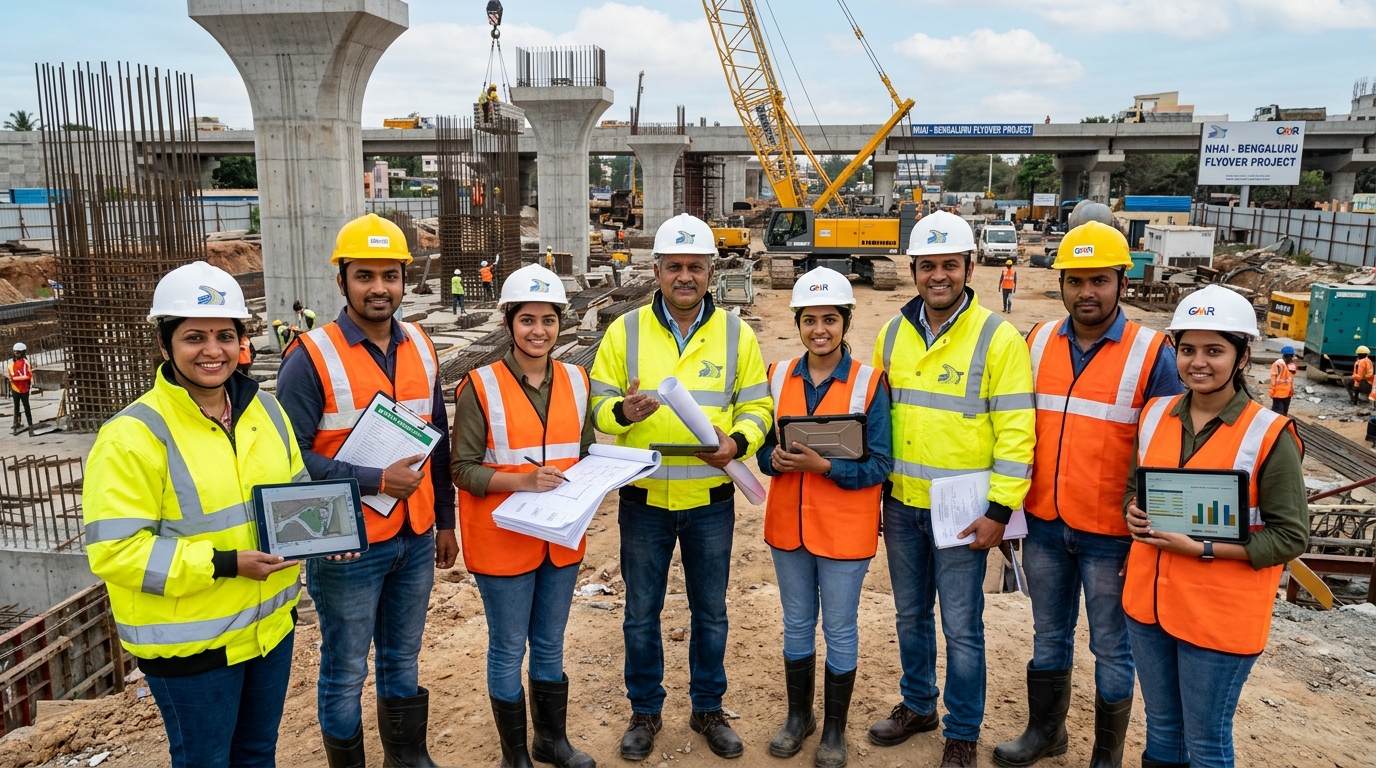
Construction remains one of the most hazardous industries in India, accounting for nearly 11% of workplace fatalities according to the National Safety Council. With increasing scrutiny from labour departments and rising legal liability, construction safety is no longer optional — it's a regulatory and moral imperative. RC Enterprises has maintained a zero-fatality record across 150+ projects through strict adherence to the following 10 safety protocols.
1. Mandatory PPE (Personal Protective Equipment) on All Sites
Every worker entering the site must wear a hard hat, safety shoes with steel toe caps, high-visibility vests, and gloves. For work above 2 meters, fall arrest harnesses are mandatory. RC Enterprises conducts daily gate checks before shift start — no PPE, no entry. This simple rule has reduced minor injuries by 60% over the past 5 years.
2. Daily Toolbox Talks Before Work Begins
Every morning, site supervisors conduct a 10-minute safety briefing covering the day's tasks, potential hazards, and emergency procedures. This keeps safety top-of-mind and allows workers to raise concerns before incidents occur. Studies show daily toolbox talks reduce accidents by 35%.
3. Scaffolding Inspection and Certification
Scaffolds must be designed by a qualified engineer, inspected before first use, and re-inspected every 7 days or after adverse weather. All scaffolds must have toe boards, guardrails, and proper access ladders. Never allow makeshift scaffolding — this is the leading cause of fatal falls in Indian construction.
4. Excavation Safety: Shoring, Sloping, and Barricading
Any excavation deeper than 1.5 meters must have protective systems (shoring or sloping) to prevent cave-ins. Excavated soil must be kept at least 60 cm away from the edge. Always have a competent person inspect trenches before workers enter. Cave-in accidents are almost always fatal.
5. Electrical Safety: Lockout/Tagout and Ground Fault Protection
Temporary electrical installations must use ELCB (Earth Leakage Circuit Breakers). All junction boxes and cables must be properly insulated and kept away from water. Before any electrical maintenance, follow Lockout/Tagout procedures. Electrocution is the second-leading cause of construction deaths in India.
6. Heavy Equipment Operator Certification
Only trained and certified operators should handle excavators, cranes, loaders, or forklifts. Operators must perform daily pre-use inspections. RC Enterprises verifies operator licenses and provides refresher training every 6 months. Unauthorized operation voids insurance and invites criminal liability.
7. Fire Prevention and Fire Extinguisher Placement
Keep at least one ABC-type fire extinguisher for every 150 sq meters of site area. Store flammable materials (diesel, paints, gas cylinders) in designated, ventilated areas away from ignition sources. Train all supervisors in fire extinguisher use. Conduct monthly fire drills.
8. Material Handling: No Overhead Lifts Without Signalman
When lifting materials with a crane or hoist, always use a trained signalman. Never walk under a suspended load. Ensure lifting equipment (chains, slings, hooks) is inspected weekly and discarded if damaged. Most crane accidents happen due to poor communication and rigging failure.
9. First Aid and Emergency Medical Response
Every site must have a first aid box, a trained first-aider, and emergency contact numbers displayed prominently. For sites with 100+ workers, maintain an on-site paramedic. Have a medical evacuation plan and know the nearest hospital route. Fast response in the first 10 minutes can save lives.
10. Monthly Safety Audits and Incident Reporting
Conduct monthly safety audits using a checklist (we share ours with clients upon request). Record all incidents — even near-misses — in a logbook and investigate root causes. A transparent safety culture, where workers can report hazards without fear, is the foundation of a safe site.
RC Enterprises Safety Commitment
At RC Enterprises, safety isn't a poster on the wall — it's embedded in every project contract, site induction, and daily work routine. If you're looking for a contractor who prioritizes worker safety and regulatory compliance alongside timely delivery, reach out to our team. Safety and quality go hand in hand.